
How to clean leather shoes: 12 Expert Methods for Incredible Results
Keeping your leather footwear in excellent condition is both a science and an art. In this article, we’ll explore how to clean leather shoes using both professional and home-care techniques. We’ll go step-by-step, covering cleaning, conditioning, polishing, stain removal, storage, and preventive maintenance. Whether you own casual leather sneakers, vintage brogues, high-end Italian gloveskin leather, or rugged work boots—this is the ultimate resource on how to clean leather shoes effectively.
Understanding Leather: Types and Cleaning Behavior
Before learning how to clean leather shoes, it’s crucial to understand leather types:
Full-grain leather
- The strongest and most durable form.
- Typically used in premium dress shoes and boots.
- Responds well to conditioning and polishing.
Top-grain leather
- Slightly processed and thinner than full-grain.
- Smooth and softer, but requires careful conditioning.
Corrected-grain / coated leather
- Lower-grade leather with synthetic coating.
- Easy to clean but less breathable.
Patent leather
- Shiny, glossy, smooth surface.
- Requires special cleaning technique to avoid scratching.
Suede & Nubuck (not traditional smooth leather)
- Absorbent and delicate.
- Require completely different cleaning methods (covered later).
Understanding the leather type makes a major difference in how to clean leather shoes the right way—since each type requires different products, methods, and frequency of care.
Tools & Materials You’ll Need
To master how to clean leather shoes, the right tools are key:
Basic cleaning tools:
- Soft horsehair brush
- Microfiber cloth
- Cotton towel
- Soft toothbrush (for seams)
- Shoe trees (cedar recommended)
Cleaning solutions:
- pH-balanced leather cleaner
- Saddle soap (for heavy dirt)
- Mild dish soap + warm water (backup solution)
Care products:
- Leather conditioner
- Leather cream or polish
- Waterproofing spray (optional)
- Mink oil (for rugged/work leather)
Optional specialty tools:
- Edge dressing / heel coloring
- Crease reducer
- Suede + nubuck brush (for those materials)
- Leather stain remover
Having these tools ready makes the process of how to clean leather shoes much more efficient and professional.
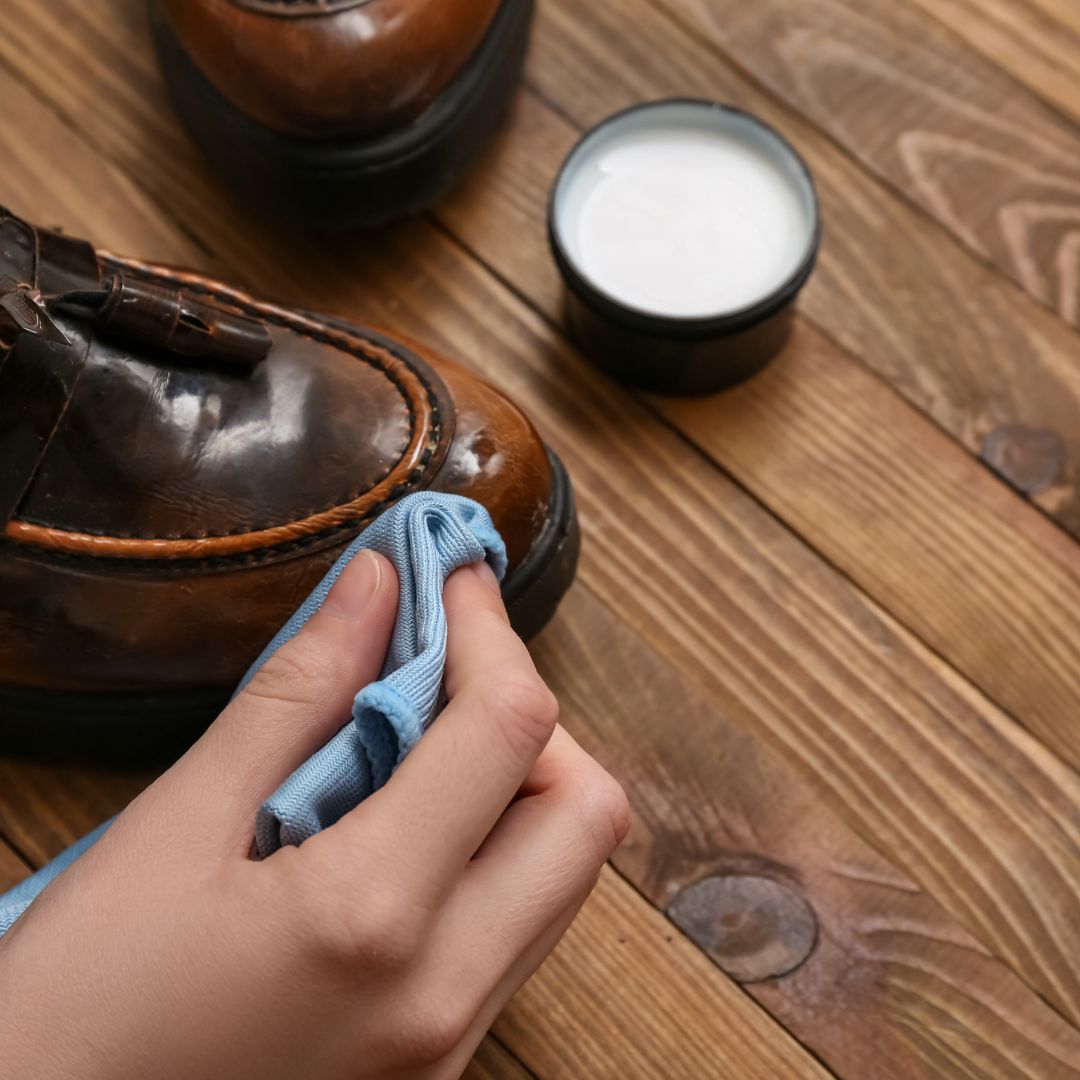
Step-by-Step — How to Clean Leather Shoes (Main Method)
This is the safest and most generally effective method for everyday leather cleaning.
Step 1 — Insert Shoe Trees
- Keeps the shoe shape.
- Smooths wrinkles.
- Aids in easier cleaning.
Step 2 — Remove Surface Dust
Use a horsehair brush lightly across the whole shoe.
Purpose:
- Removes loose dust and debris.
- Prevents scratching during deeper cleaning.
This first step alone solves about 60% of visible dirt when learning how to clean leather shoes.
Step 3 — Wipe With Damp Cloth
- Use warm water.
- Wring cloth is completely dry.
- Wipe in circular motions.
This removes superficial grime.
Avoid soaking — leather is porous and absorbs moisture.
Step 4 — Apply Leather Cleaner
Put a small amount onto a cloth or sponge and apply gently.
- Clean evenly.
- Avoid putting too much pressure.
- Be patient.
This reveals the true condition of the leather underneath.
Step 5 — Dry Naturally
- Never sun-dry.
- Never use a blow-dryer.
- Never put it near the heater.
Direct heat cracks leather and causes shrinkage.
Step 6 — Condition Leather
Conditioning is the most important step in knowing how to clean leather shoes properly.
Use a small amount of conditioner using a circular motion.
Why conditioning matters:
- Restores lost oils.
- Prevents cracking.
- Maintains softness.
Let the conditioner absorb for at least 20–30 minutes.
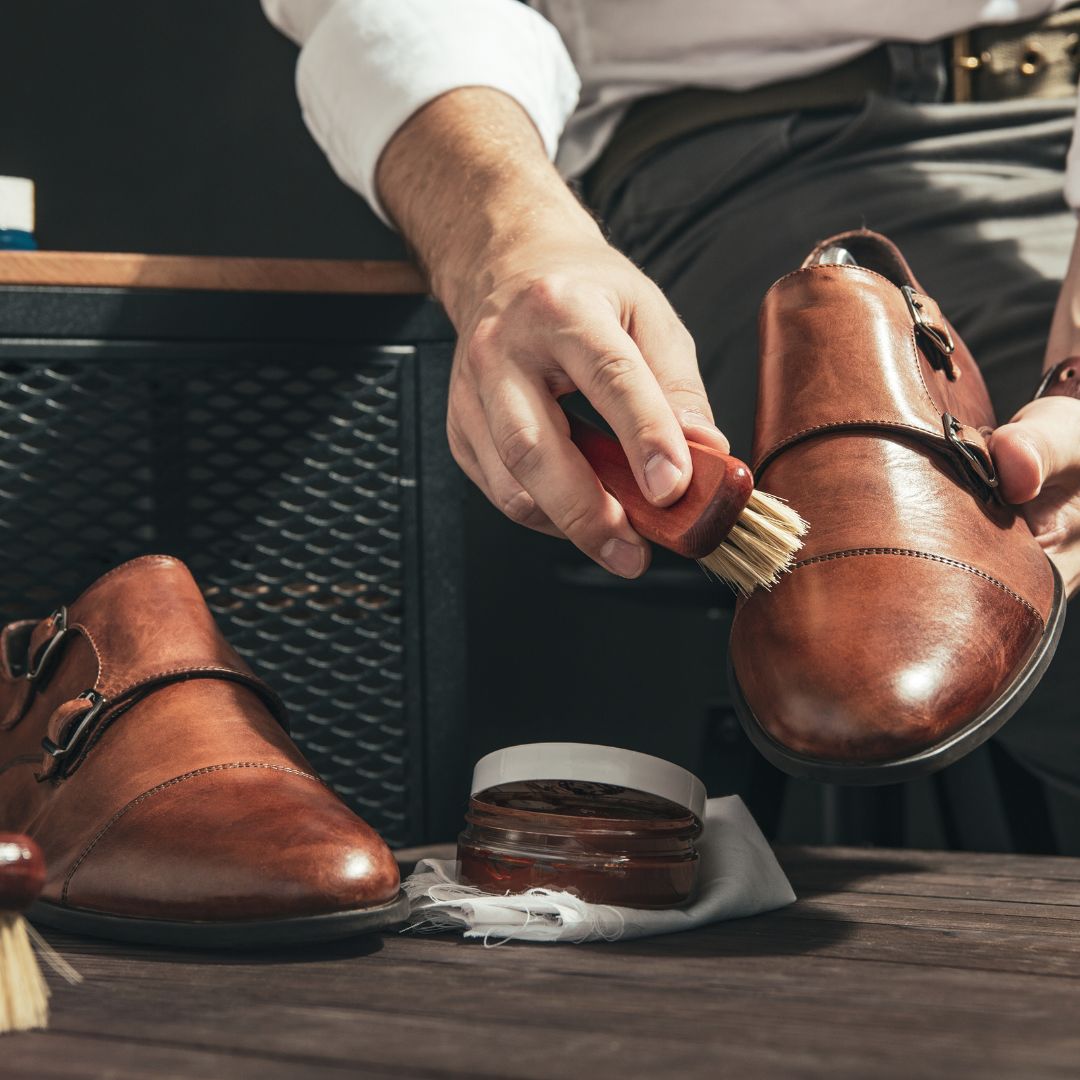
Step 7 — Buff & Polish
Use a brush or buffing cloth:
- Brings back shine.
- Smooths the leather surface.
- Protects from moisture.
Finally, you’ll have clean, restored leather with a healthy, elegant finish.
Deep Cleaning vs. Regular Cleaning—How Often?
Everyday Maintenance (after each wear)
- Brush lightly
- Wipe moisture
Weekly Care
- Light brushing + buffing
Monthly Care
- Full cleaning + light conditioning
Every 3–6 Months
- Deep conditioning
- Polish treatment
For people who wear dress shoes daily: monthly conditioning is essential.
For work boots or outdoor walking shoes:
- More conditioning
- More waterproofing
- Less polishing
Frequency depends on climate too. Humid tropical areas vs. dry climates change how often you must condition when learning how to clean leather shoes long-term.
Removing Shoe Stains Properly
Different stains require different cleaning approaches.
Water stains
- Apply a full-surface damp wipe.
- Smooth edges to prevent water rings.
Salt stains (common in winter climates)
- 50/50 vinegar + water
- Wipe gently
- Then condition
Oil & grease stains
- Use talcum powder or cornstarch.
- Let sit 8–12 hours.
- Brush off.
Ink stains
- Leather stain remover or professional product.
- Do NOT wipe with water—makes it worse.
Scuff marks
- Use a leather cream matching the shoe color.
- Massage and blend it in.
Learning how to clean leather shoes also means knowing when not to try home remedies—for example, never use alcohol, nail polish remover, or bleach on leather.
How to Clean Leather Shoes Based on Color
Cleaning Black Leather Shoes
- Use black polish.
- Use matching color conditioner or neutral.
Cleaning Brown Leather Shoes
- Brown leather varies widely (tan, cognac, deep brown, mahogany).
- Choose polish carefully.
Cleaning White Leather Shoes
- More prone to visible dirt.
- Use white cream or sneaker leather cleaner.
- Avoid harsh chemicals.
Cleaning Colored Leather (red, green, blue, etc.)
- Use neutral cream or color-specific products.
Color-appropriate treatment is a big part of mastering cleaning leather shoes safely.
How to Clean Leather Sneakers vs. Leather Dress Shoes
Leather sneakers:
- Often softer leather
- More sweat absorption
- Better with mild cleaners
Leather dress shoes:
- Harder leather
- Higher polish demand
- Require more conditioning and buffing
Work boots:
- Thick leather with oil treatment
- Mink oil useful
- Less aesthetic polishing required
Motorcycle boots:
- More waterproofing needed
- Harder cleaning because of road grime
Mistakes to Avoid When Learning How to Clean Leather Shoes
Never:
- Use direct heat to dry
- Use bleach or ammonia
- Over-moisturize the leather
- Store wet
- Rub aggressively
- Use too much polish (clogs pores)
Leather must breathe; blocking pores leads to dryness and cracking.
Natural & DIY Cleaning Methods
Mild soap solution
Works for regular dirt.
Olive oil?
- Sometimes suggested—but actually not recommended.
- Can darken or stain leather.
Baking soda for odors
- Can neutralize smell
- Sprinkle inside shoe—NOT on outside
White vinegar (diluted)
- Works for salt stains
- Not general cleaning
DIY can work—but professional leather cream always produces safer results.
Conditioning vs. Polishing — Understanding the Difference
Many people misunderstand this part of how to clean leather shoes.
Conditioning:
- Nourishes leather
- Penetrates fabric pores
- Restores flexibility
Polishing:
- Surface cosmetic enhancement
- Adds shine
- Minor waterproofing
- Stain and scratch camouflage
Important: Always condition before polishing.
Waterproofing Leather Safely
Waterproofing doesn’t mean rubberizing leather—breathability matters.
Waterproofing methods:
- Wax-based protectants (classic)
- Spray-based protectants (light)
- Oil-based protectants (for rugged boots)
Waterproofing is a preventive aspect of learning and keeping them protected.
Shoe Storage & Longevity
Correct storage is crucial.
- Use cedar shoe trees.
- Store in breathable cotton bags.
- Avoid plastic containers.
- Keep away from direct sunlight.
- Maintain 40–60% humidity.
Leather is skin—storage affects its aging and appearance.
How to Clean Leather Shoes With Special Materials
With metal buckles:
Brush around metal—avoid scratching leather.
With fabric-leather hybrids:
Treat leather separately from synthetic areas.
With intricate stitching:
Use a toothbrush to remove dirt from seams.
Exotic leather (snake, crocodile, ostrich):
- Needs specific cleaners.
- Avoid generic conditioning.
Professional treatment recommended.
When to Seek Professional Cleaning
Some situations require expert services:
- Deep salt contamination
- Vintage leather restoration
- Severe cracking
- Mold
- Dye discoloration
- Luxury leather brands
Professionals have industrial-grade conditioners, sterilizers, and finishing tools.
The Science Behind Leather Aging
Leather loses oils over time.
Stress factors:
- UV light
- Sweat acidity
- Dry climate
- Friction
- Water exposure
Proper cleaning and conditioning maintain elasticity and prevent micro-tears.
This understanding is central to knowing cleaning leather shoes not as a cosmetic chore—but as long-term material preservation.
FAQ — Real-World Cleaning Questions
Q: How often should I condition leather shoes?
Every 4–6 weeks typically.
Q: Can baby wipes clean leather?
No—many contain alcohol which dries leather.
Q: Is petroleum jelly good for leather?
No—can clog leather pores permanently.
Q: Can I wash leather shoes in a washing machine?
Never.
Q: Can sunlight disinfect leather?
Yes—but also destroys it.
UV exposure dries and cracks leather.
The Core Principles of How to Clean Leather Shoes
- Remove loose dirt first.
- Avoid soaking the leather.
- Use pH-balanced leather cleaners.
- Condition regularly.
- Polish occasionally.
- Never heat-dry.
- Store properly.
- Know your leather type.
Learning how to clean leather shoes properly preserves leather integrity, enhances appearance, and extends the lifespan of your footwear dramatically—whether they’re budget-friendly casual shoes or thousand-dollar Italian leather oxfords.