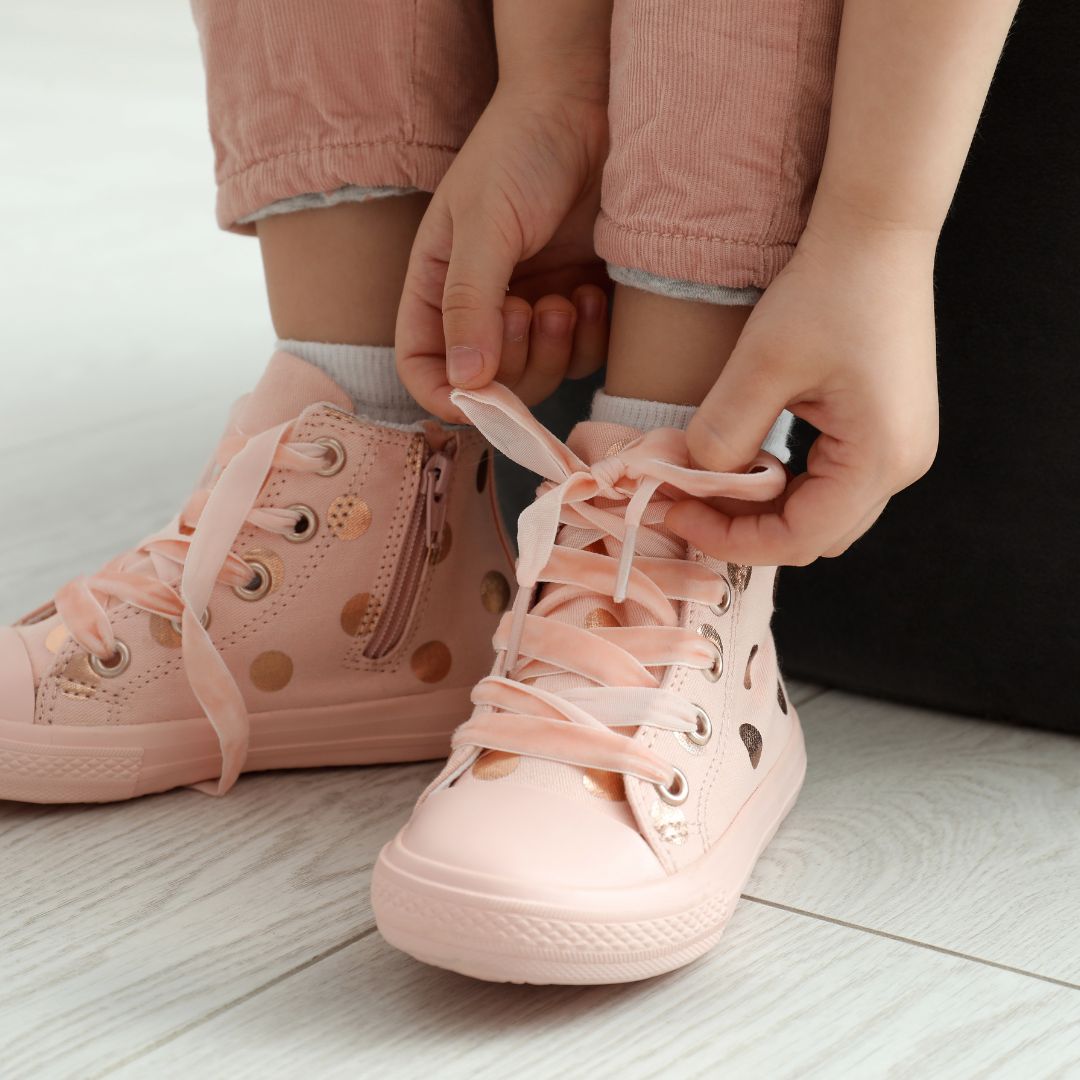
How to tie your shoes — 19 Beginner-Friendly, Expert-Level Guide
Learning how to tie your shoes seems simple, but it’s actually an essential life skill that connects motor development, independence, safety, cultural tradition, and custom techniques. Whether you’re a child learning it for the first time or an adult refining or optimizing a better, faster, or more aesthetically pleasing method, knowing how to tie your shoes is useful daily — from casual sneakers to sports shoes, hiking boots, formal wear, and specialized lacing needs.
This comprehensive guide is going to walk you through the history, psychology, motor-skill science, multiple methods, troubleshooting, speed tying, aesthetic tying, and special-scenario tying — ultimately turning you into a truly confident expert on how to tie your shoes.
Section 1 — The history and evolution of shoe-tying
Before understanding how to tie your shoes, it helps to understand why we tie shoes the way we do.
Shoes have existed for thousands of years. Ancient sandals were secured with rope or leather thongs. Most didn’t require tying in a bow — they were simply knotted. As shoemaking evolved, especially in the medieval period, footwear began being constructed with leather laces for adjustability and durability.
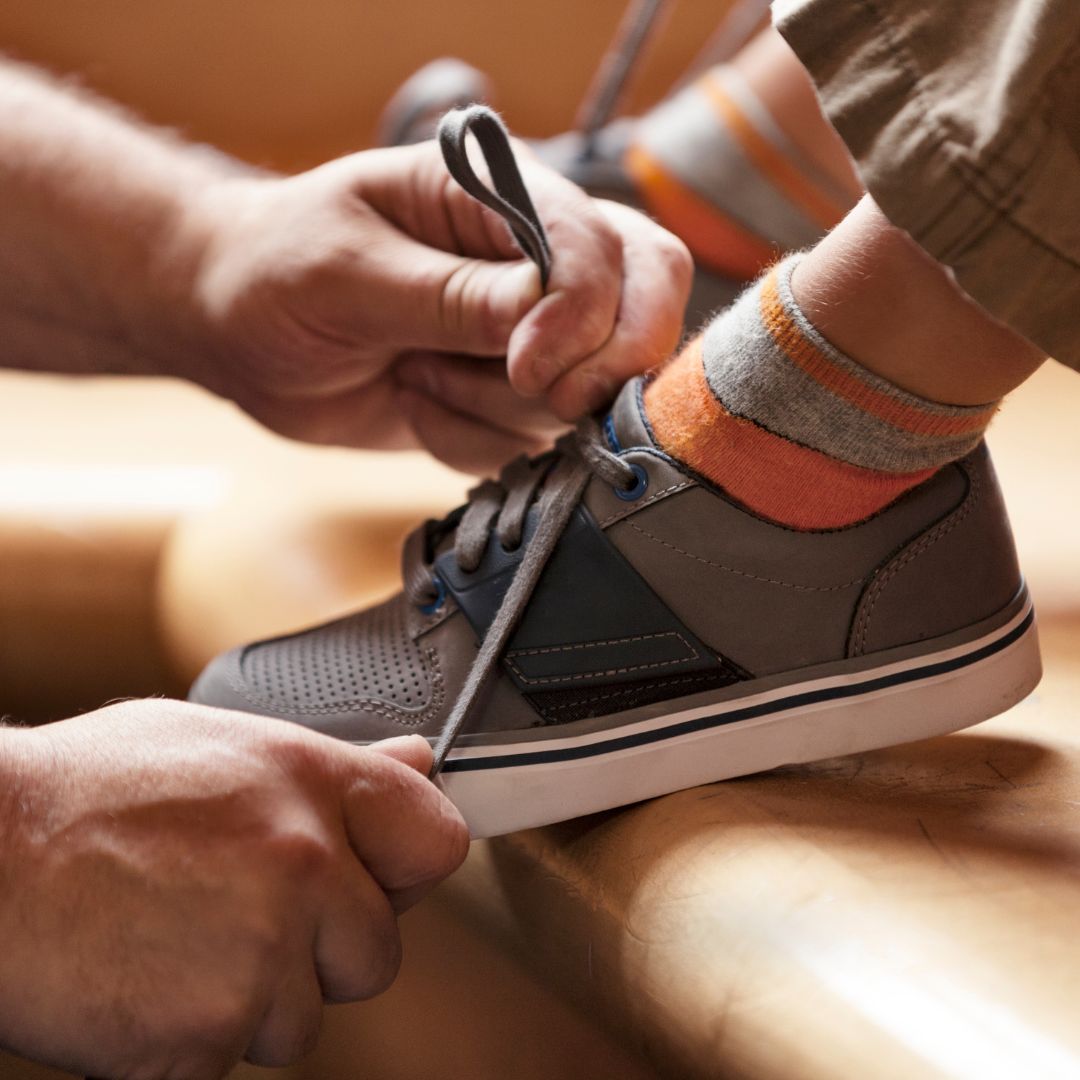
By the Victorian era, laced-up boots with eyelets were common — particularly for women and military uniforms. Factory mass production in the 19th–20th century standardized the shoelace eyelets spacing and lace lengths we use today.
And so the tradition of learning how to tie your shoes became a universal childhood developmental milestone.
Section 2 — Why knowing how to tie your shoes matters
Shoelaces aren’t merely decorative — they provide:
- Fit stability
- Ankle support
- Reduced friction
- Movement safety
- Custom tension control
- Injury prevention
When you know how to tie your shoes properly, you reduce tripping, blisters, lace snapping, and uneven pressure distribution. Athletes, dancers, hikers, and workers in industries requiring safety shoes especially benefit from reliable tying technique.
Section 3 — Preparing to learn how to tie your shoes
Before practicing, you’ll need:
- A shoe with laces
- A comfortable sitting position
- Laces that are equal in length
- Calm focus
- Two functioning hands, but we’ll also later learn one-handed methods
It’s important to ensure that both ends of the laces are symmetrical. If one side is longer, it will lead to unbalanced bow loops.
Section 4 — The classic “bunny ears” method
This is usually the first method children learn when mastering how to tie your shoes.
Step-by-step
- Start with a simple crossing of the laces.
- Pull tight.
- Make one loop with the left lace (“first bunny ear”).
- Make another loop with the right lace (“second bunny ear”).
- Cross one loop over the other.
- Pull the bottom loop through the hole created.
- Pull both loops tight.
This method is intuitive because it visualizes the shoelaces as two “ears,” and this mental metaphor helps young learners internalize how each hand motion works.
Section 5 — The standard “loop-and-wrap” method (the adult method)
This is considered the more mature and efficient technique of how to tie your shoes used by most adults.
Step-by-step
- Cross the laces and pull tight.
- Make a single loop with the right lace.
- Wrap the left lace around that loop.
- Pull through the small opening.
- Tighten evenly.
This method results in a cleaner knot that sits more horizontally, unlike the accidental “slanted” bow that happens when the knot is tied incorrectly.
Section 6 — Why shoelaces come undone
Even if you know how to tie your shoes, you’ve probably experienced the annoying phenomenon of laces coming loose. The common reasons include:
- Incorrect pulling angle
- Low lace friction
- Walking force causing gradual loosening
- Incorrect knot orientation
- Twisted laces
- Slippery synthetic lace material
Mechanical engineers have studied shoe-tying and found that the motion of walking creates alternating acceleration and force that literally teases the knot loose over time — unless tied with sufficient tension and symmetrical balancing.
Section 7 — The “double knot” method for extra security
Many people tie shoes properly but still need extra firmness. This is where the double knot — emphasizing reinforcement — comes in.
Step-by-step
- Tie your shoelaces normally.
- Take the two bow loops.
- Tie those loops in an additional overhand knot.
- Pull tight.
This prevents almost all accidental loosening during:
- Running
- Sports
- Climbing
- Hiking
- Skating
- Martial arts
Section 8 — Aesthetic shoe-tying techniques (fashion-forward lacing)
Here we go beyond simply knowing how to tie your shoes — now we look at style.
1. Bar-lacing (common for dress shoes)
Creates straight horizontal lines and a sleek minimal appearance.
2. Hidden-knot lacing
The knot goes inside the shoe for a clean exterior.
3. Ladder-style lacing
Popular in boots and combat footwear — looks structured and sturdy.
4. Diamond/zig-zag lacing
Expressive, modern, eye-catching — used for streetwear and sneaker art culture.
When you understand how to tie your shoes stylistically, your footwear becomes a form of personal branding.
Section 9 — How to teach kids how to tie their shoes (child-friendly methods)
Kids learning how to tie your shoes often experience frustration if the process is too abstract or rushed.
Principles:
- Slow down movement
- Demonstrate visually
- Use colored laces for contrast
- Employ repetition
- Offer encouragement
- Avoid micromanaging their exact hand movement
- Praise progress over perfection
Helpful trick:
Have them practice on a cardboard shoe model with holes punched for lacing. This removes wiggly feet and simplifies the learning phase.
Section 10 — One-handed shoe-tying (for medical or disability scenarios)
The ability to tie shoes one-handed is essential for those with:
- Temporary injury
- Permanent limb difference
- Stroke-related motor limitations
There are specialized one-handed methods for how to tie your shoes, relying on bracing a lace against the shoe or leg to create tension.
There are also elastic and self-tightening lace systems for ease of use.
Section 11 — Athletic tying — performance and sports-grade methods
Different sports require different tension and lacing dynamics.
For running
- The “heel-lock” or “runner’s loop” prevents heel slippage.
For basketball
- High tension around the ankle prevents rolling.
For hiking
- Variable-tension zones allow flexibility at the toes and rigidity at the ankle.
For skating or snow boots
- Extremely firm lacing to secure full-foot stability.
Athletes know that how to tie your shoes can directly affect injury risk and performance quality.
Section 12 — Cultural and symbolic meaning of tying shoes
The act of tying shoes can symbolize:
- Independence in childhood
- Self-care
- Adulthood responsibility
- Readiness
- Humility (bowing posture)
- Ritual preparation (e.g., before entering sacred space)
Parents emotionally remember the day their child first succeeded in learning how to tie your shoes, because it symbolizes a transition in autonomy.
Section 13 — Common mistakes when learning how to tie your shoes
Here are the typical errors:
- Not pulling first knot tight enough
- Twisting loops prematurely
- Using uneven lace lengths
- Pulling from wrong angle
- Forming loops too large or too small
- Relying on weak bows rather than proper structure
When mastering how to tie your shoes, fixing these mistakes improves knot stability dramatically.
Section 14 — Troubleshooting shoelace problems
If your laces are too long:
- Tuck excess under lacing
- Use shorter replacement laces
- Use hidden knot method
If too short:
- Loosen lower eyelets to free length
- Replace with longer laces
If slippery:
- Use textured or fabric-weave laces
- Use double knotting
- Add friction with lace grips
Section 15 — Advanced knot variations
The surgeon’s knot (extra-friction secure tying)
The first wrap is doubled to increase friction before forming loops.
The Ian Knot (fastest known shoe-tying method)
Executed in a single swift symmetrical motion. It is efficient and secure and extremely popular among performance-minded individuals.
Understanding multiple methods expands your capability regarding how to tie your shoes for any circumstance.
Section 16 — Teaching adults who never learned
Some adults never learned how to tie your shoes, and often feel embarrassed admitting it. But this is simply a gap in taught motor behavior, not intelligence or capability. Adults tend to learn faster due to developed spatial reasoning.
Section 17 — Cognitive benefits of learning how to tie your shoes
For children:
- Fine motor development
- Bilateral hand coordination
- Procedural memory
- Sequencing skills
- Patience building
For adults:
- Brain engagement
- Dexterity maintenance
- Mind-body coordination
Section 18 — Psychological dimension
Learning how to tie your shoes creates a sense of control and autonomy. It is a miniature self-achievement that quietly impacts self-confidence.
Section 19 — The future of shoe-tying: laces vs. no-laces
In recent decades:
- Velcro shoes increased convenience
- Slip-on design tech improved
- Elastic “no-tie” laces became popular
- Magnetic clasp systems emerged
- Smart self-tightening shoes were developed
However, traditional shoelaces remain standard, flexible, reliable, and cost-effective — which is why how to tie your shoes remains an important skill.
Conclusion
Knowing how to tie your shoes is much more than a mundane task. It is a fundamental human skill involving physical technique, historical tradition, mechanical logic, aesthetic expression, and self-reliance. With multiple tying methods, troubleshooting approaches, and adaptability for various needs, one becomes fully equipped to tie shoes securely, efficiently, and beautifully for life.